Bird Song Guide Listening Lab Five voices to know

Hear the bird.
See the pattern.

Five familiar backyard birds, one recording at a time. Listen for pitch, rhythm, repetition, and tone: the four clues that turn a blur of birdsong into voices you recognize.

5 field recordings 20 listening cues 0 autoplay

Start at a comfortable volume. Field recordings can contain sudden, sharp calls.

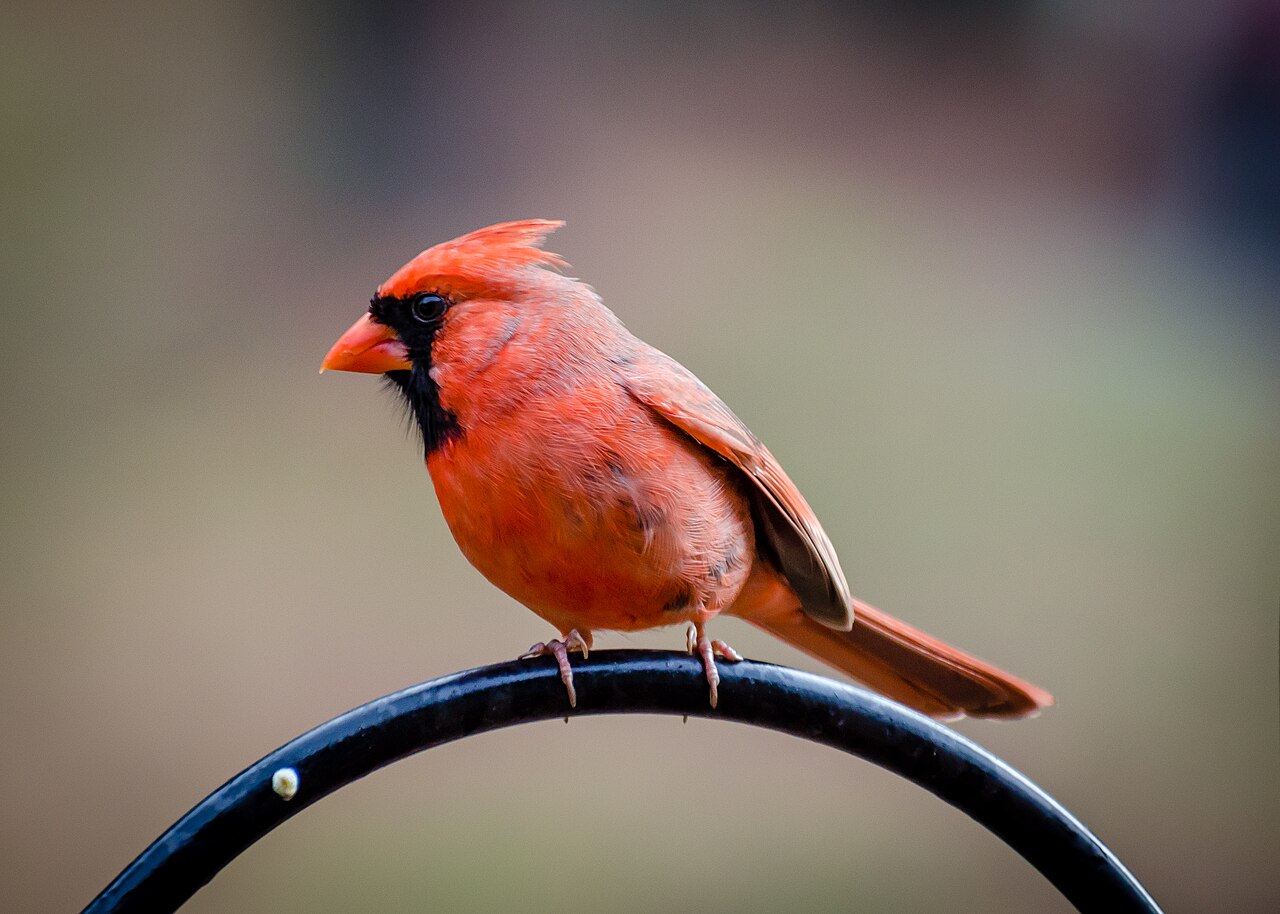
Male Northern Cardinal perched against a softly blurred background Photo: Defi22 / CC BY-SA 4.0 Start with the cardinal

Listen in layers.

Do not memorize every note. Cornell’s bird-song guidance recommends isolating a few durable qualities. These four work even when an individual changes the exact phrase.

01

Pitch

High, low, level, rising, or falling?

02

Rhythm

Evenly spaced, hurried, or full of pauses?

03

Tone

Clear whistle, rich warble, dry rattle, or harsh cry?

04

Repetition

What unit repeats, and how many times?

The player graphic below is an amplitude envelope made from each featured recording: time moves left to right and taller bars are louder. It is not a frequency spectrogram.

Male Northern Cardinal with a red crest and black face mask
Defi22 / Wikimedia Commons, CC BY-SA 4.0; 1280-pixel derivative, filename normalized.
01 / 05

Cardinalis cardinalis

Northern Cardinal

Remember it as “cheer, cheer, cheer”

The classic cardinal song is a bright string of whistles that bends sharply up or down. The common call in this recording is shorter: a hard, metallic chip carrying cleanly through shrubs.

Clear whistleDown-slurredBoth sexes sing
Featured field recording

Male contact call · Minnesota

0:00Listen for isolated, bright chips separated by silence0:25

What to listen for

In the full song, notes often sweep downward, reverse direction, or split into two parts before a slower trill. A typical song lasts only two or three seconds.

Easy confusion

A single cardinal chip can disappear into general backyard chatter. Wait for repetition from dense cover; the note is unusually sharp and metallic.

The memorable detail

Unlike most familiar northern songbirds, female Northern Cardinals sing too. Mated birds can share phrases, so the singer is not automatically the red male.
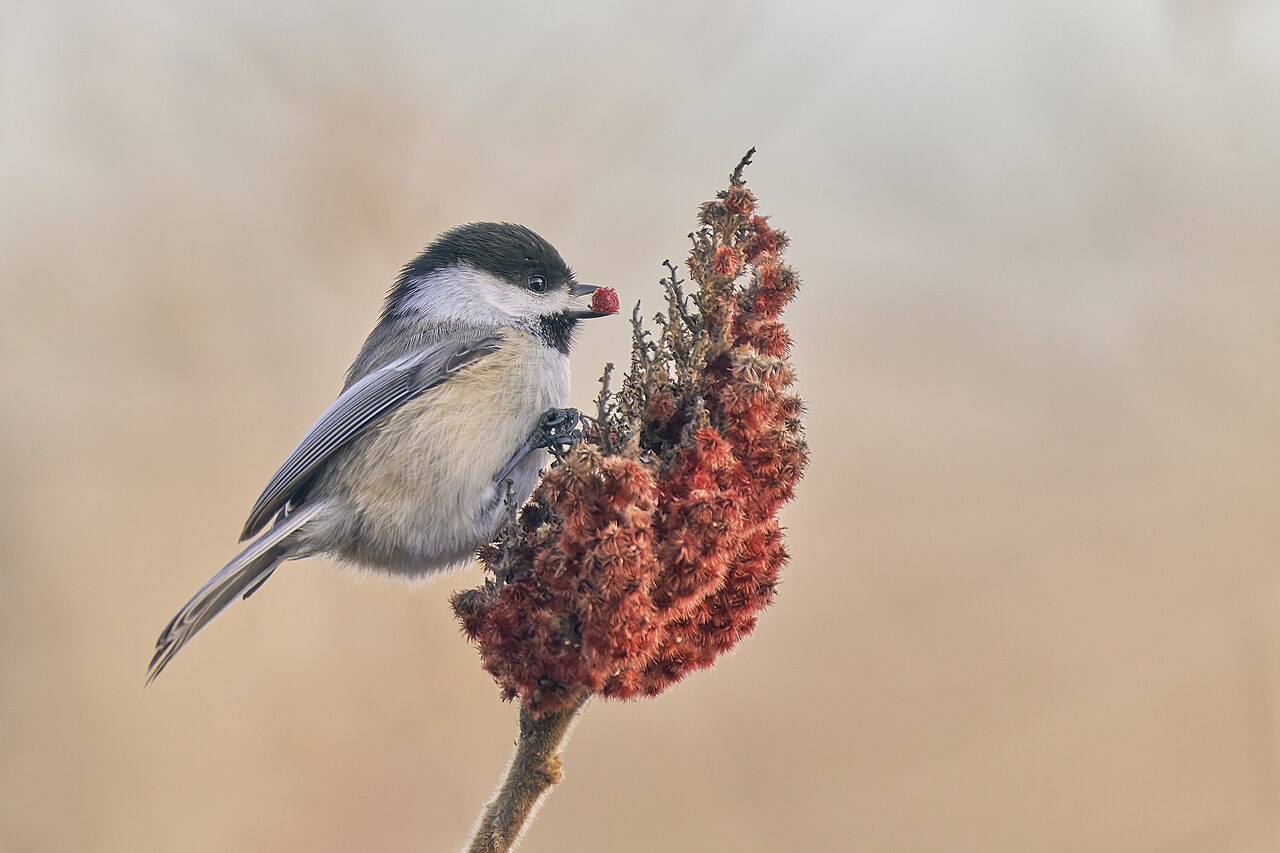
Black-capped Chickadee holding a red seed on a sumac cluster
Paul Danese / Wikimedia Commons, CC BY-SA 4.0; 1280-pixel derivative, filename normalized.
02 / 05

Poecile atricapillus

Black-capped Chickadee

Remember it as “hey, sweetie” + “chick-a-dee”

This tiny bird has two voices worth separating: a clean, descending fee-bee song and a busy namesake call. The recording below captures close contact calls from one foraging bird.

Two-note whistleAlarm codeFlock voice
Featured field recording

Foraging calls · Minnesota

0:00A long cut: notice how many call shapes one bird uses1:23
2

What to listen for

The song is spare: two or three clear notes with a conspicuous drop after the first. The call is denser, ending in the rough “dee-dee-dee” that supplied the name.

Easy confusion

Carolina Chickadees overlap along a narrow contact zone and sound quicker and higher. The Black-capped song is usually the simpler two-note phrase.

!

The memorable detail

More “dee” notes are associated with a higher perceived threat. The flock is not just naming itself; the call can carry graded alarm information.

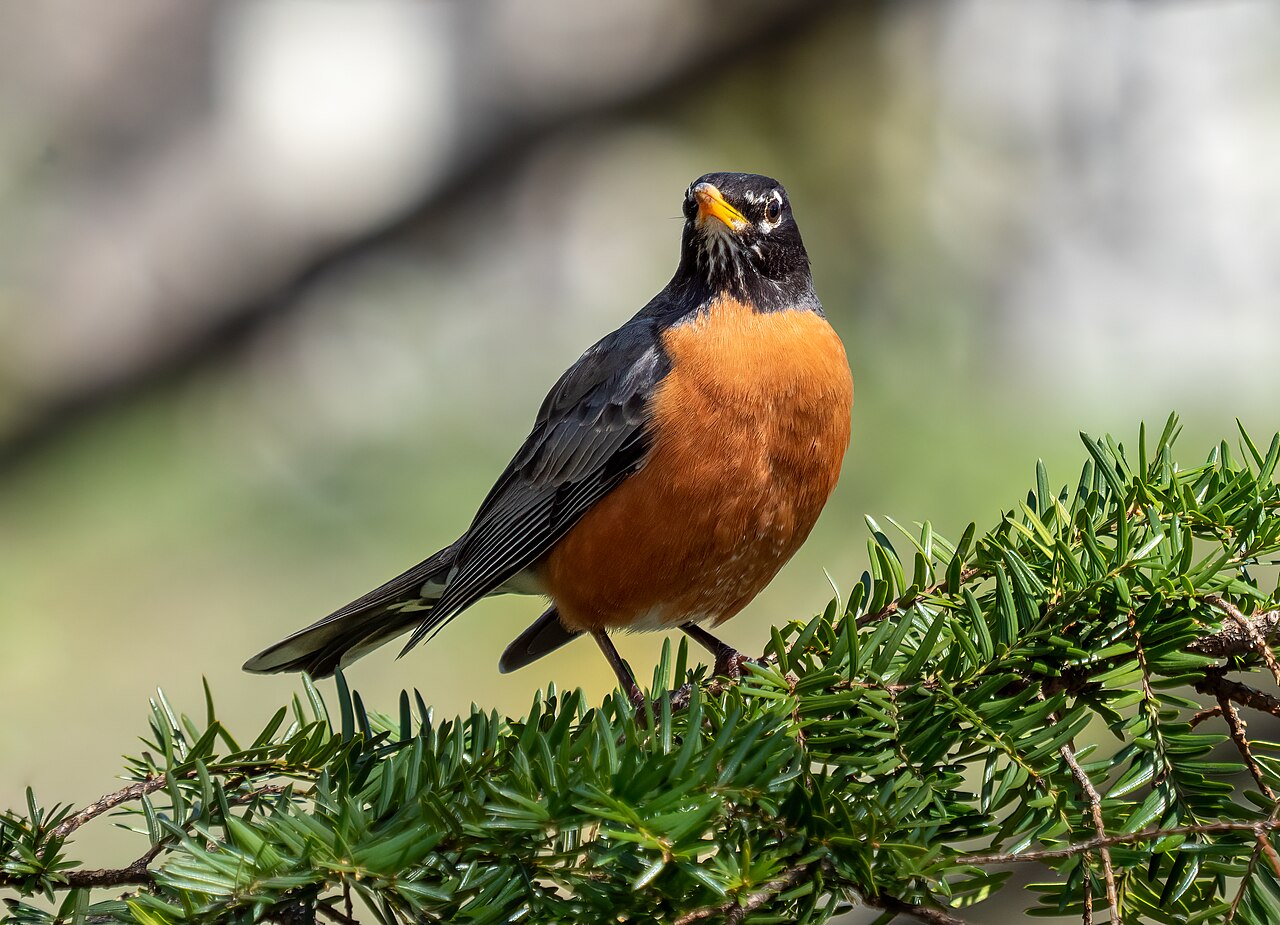
American Robin with an orange breast perched on an evergreen branch
Rhododendrites / Wikimedia Commons, CC BY-SA 4.0; 1280-pixel derivative, filename normalized.
03 / 05

Turdus migratorius

American Robin

Remember it as “cheerily, cheer-up”

The robin’s song is a relaxed chain of short, liquid phrases, each a little different. The featured recording catches social calls from a moving winter flock rather than the familiar spring carol.

Liquid warblePhrase + pauseDawn singer
Featured field recording

Winter flock calls · Minnesota

0:00Social notes from five birds chasing through a fruiting tree0:26

What to listen for

Hear each phrase as a small bundle of notes, then a breath. The phrases vary, but the warm, caroling voice and measured pace remain stable.

When it stands out

Robins are prominent early and late in the day. In winter, the full song may disappear while lower “cuck” notes still reveal flocks around fruiting trees.

The memorable detail

A spectrogram of robin song looks busy: many syllables, pitch changes, and harmonics. By ear, simplify it to “musical phrase, pause, new phrase.”

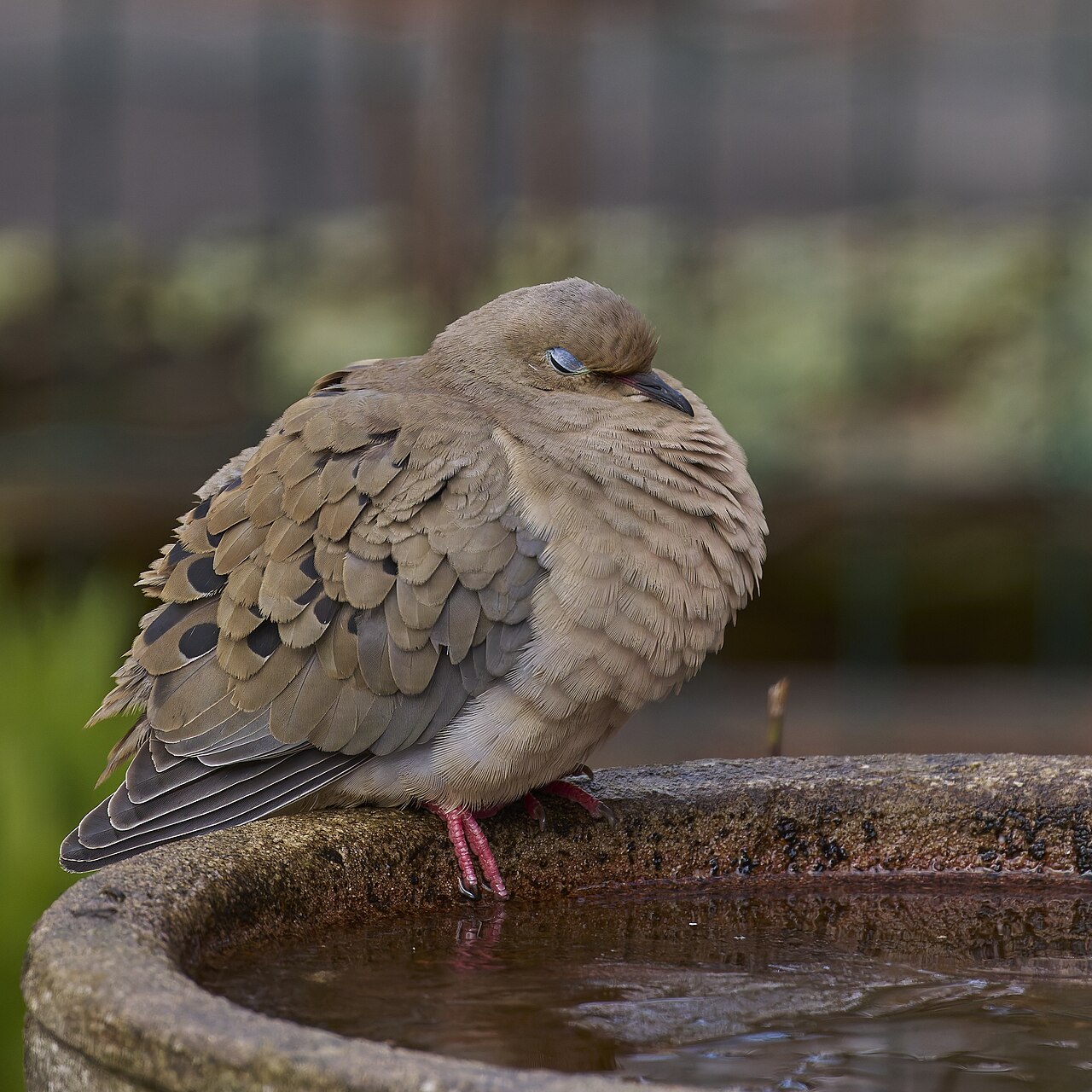
Mourning Dove resting at the edge of a bird bath
Paul Danese / Wikimedia Commons, CC BY-SA 4.0; 1280-pixel derivative, filename normalized.
04 / 05

Zenaida macroura

Mourning Dove

Remember it as “coo-OO, coo, coo”

A low, hollow coo with so much air around it that people often assume an owl is nearby. The repeated final notes and daytime perch are the giveaway.

Low cooSlow pulseWing whistle
Featured field recording

Perch call · Minnesota

0:00A soft call recorded from a bird perched overhead0:31

What to listen for

The perch-coo begins softly and continues with two or three stronger coos. A separate nest call rises in the middle: coo-OO-oo.

Easy confusion

The voice feels owl-like, but Mourning Doves commonly call in daylight from exposed wires or branches. Owl phrases also tend to be more sharply structured.

The memorable detail

The bright whistle during takeoff is not a voice at all. Air vibrates specialized wing feathers, creating a mechanical alarm that can warn flock mates.

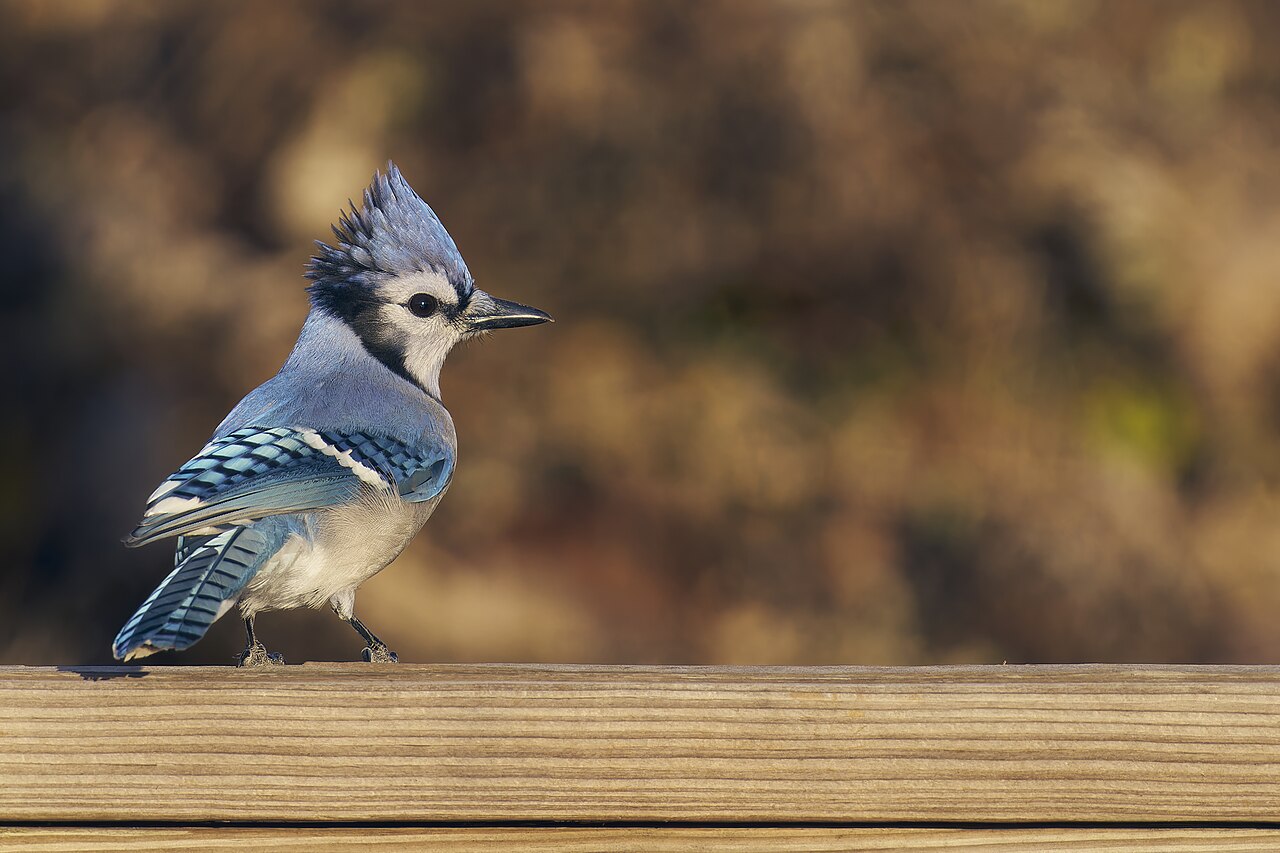
Blue Jay with raised crest perched in warm morning light
Paul Danese / Wikimedia Commons, CC BY-SA 4.0; 1280-pixel derivative, filename normalized.
05 / 05

Cyanocitta cristata

Blue Jay

Remember it as “jay!” then expect surprises

The famous jeer is only one entry in an immense vocabulary. This recording captures a dry rattle call synchronized with the bird bobbing its body.

Harsh jeerDry rattleHawk mimic
Featured field recording

Rattle call · Minnesota

0:00Two dry rattles with a long, natural pause between them0:13

What to listen for

Start with the emphatic “jay” call, but learn the softer bell or pump-handle notes too. Family groups can sound surprisingly musical and subdued.

Easy confusion

A convincing hawk call may still be a jay. Blue Jays imitate Red-shouldered and Red-tailed Hawks; look for the caller before treating one phrase as proof.

The memorable detail

The raised crest reinforces the sound: a higher crest generally accompanies greater agitation. Quiet birds feeding with family often hold it low.

A five-minute listening practice.

Choose one bird, not all five. Listen to its recording twice, say the mnemonic once, then step outside and listen for the voice quality rather than an exact match.

  1. 01
    Pick one sound

    Novelty fades faster when you keep the set small.

  2. 02
    Name three qualities

    Pitch, rhythm, and tone are enough.

  3. 03
    Confirm with context

    Season, habitat, and a visual check reduce mistakes.

Real recordings. Visible licenses. Careful limits.

Species descriptions were checked against the Cornell Lab of Ornithology’s current species accounts and bird-song learning guides. The five field recordings were made by Jonathon Jongsma and published through Xeno-canto and Wikimedia Commons under the Creative Commons licenses linked beside each player. Photos are separately credited beside each image.

The sound-signature labels are teaching summaries, not biometric measurements or identification guarantees. The waveform bars are amplitude envelopes calculated from the featured files; they show loudness through time, not pitch. Background species or ambient noise may be present in field recordings.

What if the windowsill did this part for you?

ChirpSense is a pre-release tabletop display being built to identify nearby bird songs without opening a phone app.